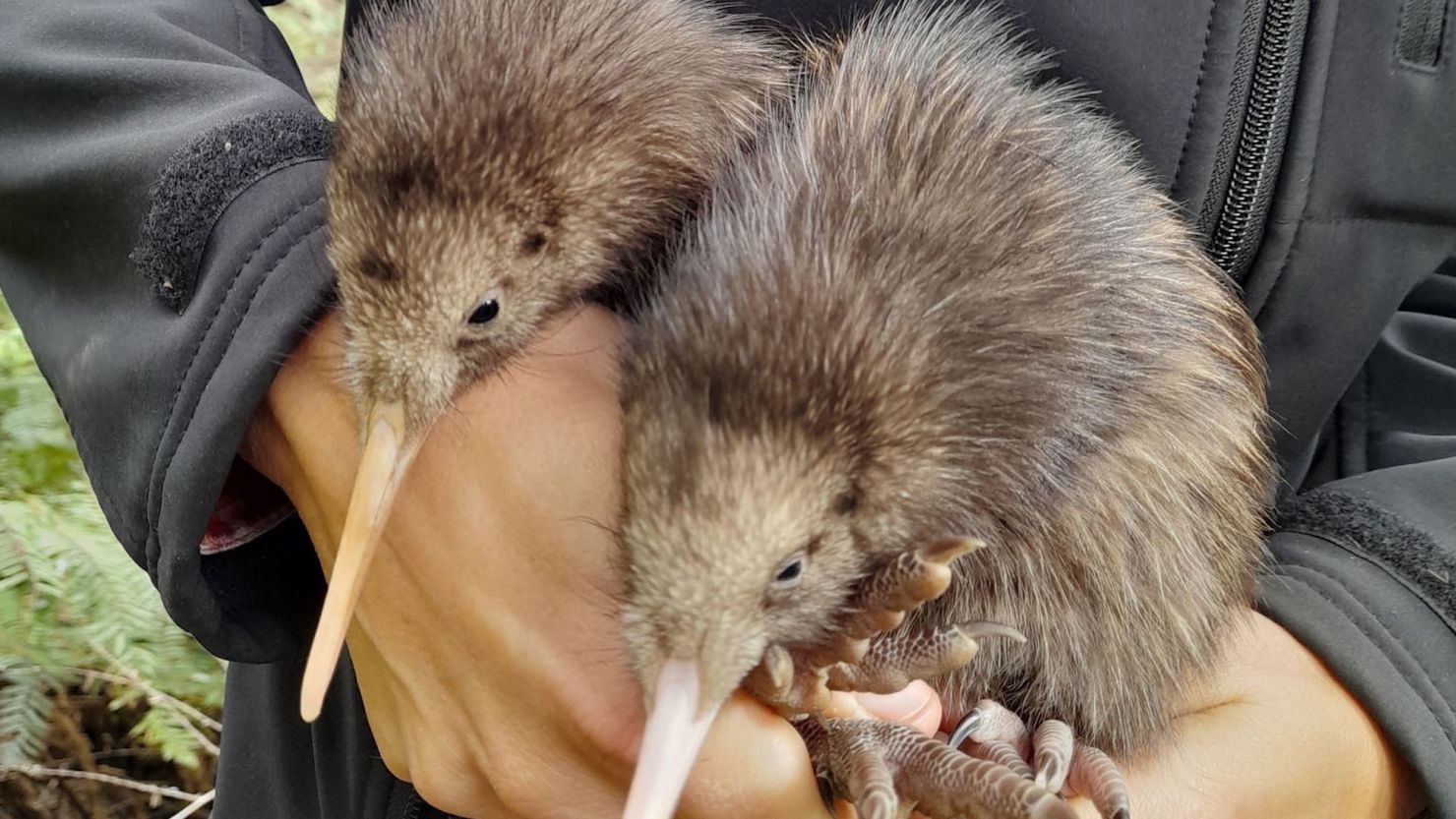
These two remarkable kiwi hatchlings, cradled in the gentle hands of Pete Kirkman, symbolized a glimmer of hope for a species that had faced decades of adversity. The conservationist marveled at the preciousness of the moment, feeling a deep sense of responsibility for the well-being of these fragile creatures.
As the second hatchling explored into his arms, Mr. Kirkman couldn’t help but marvel at the resilience of these chocolate-colored birds. Accustomed to the cover of night, their introduction to daylight seemed to bewilder them, their tiny beaks wobbling as if trying to make sense of this newfound world.
Perplexed by the daylight, the chocolate-colored nocturnal bird swayed its pencil-like beak from side to side. “You’re OK,” reassured Mr. Kirkman, a conservationist, as he made this discovery last week. Suddenly, a scratching sound emanated from the burrow. With delight, he witnessed another hatchling emerge, fervently searching for its companion, and falling into his awaiting arms
The plight of the kiwi, once a ubiquitous symbol of New Zealand’s natural heritage, had become a poignant narrative of loss. The encroachment of non-native predators had pushed these unique birds to the brink of extinction. Now, in the protective hands of Mr. Kirkman and other dedicated conservationists, there was a glimmer of a different story — one of resilience and renewal.
In the gentle embrace of the conservationist, the two hatchlings exhibited a mix of curiosity and vulnerability. Their tiny beaks, adapted for probing the forest floor in search of insects, twitched as they adjusted to the unfamiliar daylight. It was a rare sight, a testament to the tireless efforts to safeguard their species.
As news of the discovery spread, the local community rallied around the cause. The plight of the kiwi became a rallying cry for increased conservation efforts. Volunteers joined the ranks, creating a network of guardians determined to ensure the survival of these emblematic birds.
Pete Kirkman, with his weathered hands cradling the hatchlings, became a symbol of optimism. The once-declining population of kiwis now had a chance at recovery. The conservationists worked tirelessly to create safe havens, implementing innovative strategies to protect the hatchlings from the ever-looming threat of predators.
The story of the kiwi, once overshadowed by loss, was gradually being rewritten. The bustling city and its towering ferns became an unlikely refuge for these tiny creatures, showcasing the resilience of nature when given the chance to rebound. The hatchlings, with their innocent presence, were now ambassadors for a brighter, more hopeful future — a future where the iconic kiwi could once again thrive throughout the landscapes of New Zealand.
The kiwi, a native bird so cherished by New Zealanders that its name is synonymous with them, once freely roamed the entire country. From the 1800s onwards, millions fell victim to non-native predators like stoats, mammals akin to weasels. Now, a mere 70,000 kiwis remain, primarily in remote parks or on islands. Consequently, any kiwi hatchling is a cause for celebration. Yet, these two were truly exceptional.