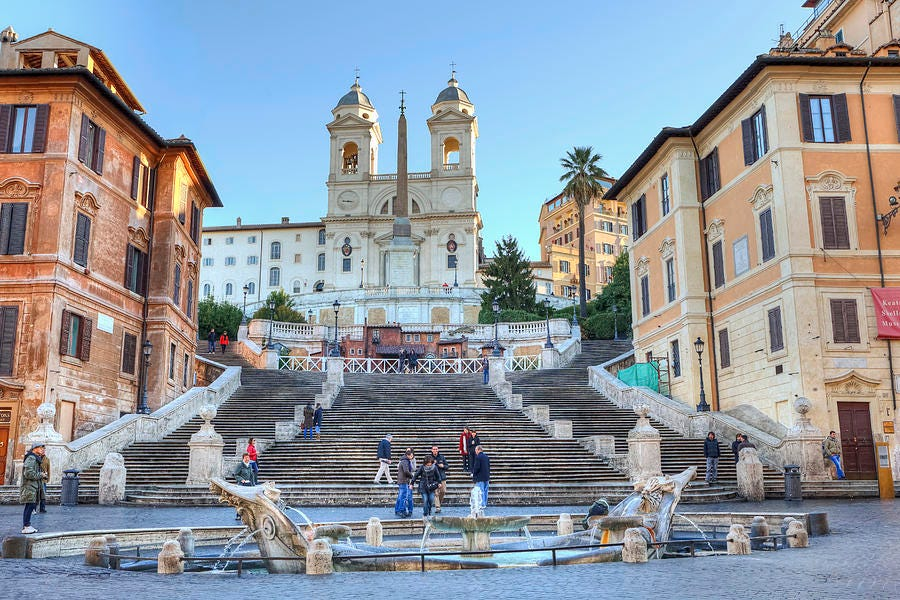
The Spanish Steps, known as “Scalinata di Trinità dei Monti” in Italian, is a captivating and iconic landmark that draws visitors from all corners of the globe. This magnificent staircase is not just a feat of architectural brilliance but also a vibrant hub of culture, art, and history. In this blog, we’ll take a closer look at the Spanish Steps, delving into their history, significance, and the enchanting experiences they offer to travelers.
A Staircase of Historical Significance
The Spanish Steps, constructed between 1723 and 1725 by the architect Francesco De Sanctis, are a testament to the Baroque period’s architectural prowess. This monumental staircase consists of 135 steps that climb a steep slope between the Piazza di Spagna at the base and the Trinità dei Monti Church at the top. The name “Spanish Steps” is derived from the nearby Spanish Embassy to the Holy See, which has been located in the Piazza di Spagna since the 17th century.
A meeting place: Historically, the Spanish Steps have served as a popular gathering spot for both locals and tourists. Its design allows for seating and resting places along the steps, making it an ideal place for people-watching, relaxation, or meeting friends.
The Keats-Shelley House: The Spanish Steps are also closely associated with the Romantic poets John Keats and Percy Bysshe Shelley. Keats lived and died in a house near the steps, which is now a museum dedicated to his life and work, known as the Keats-Shelley House. Visitors can explore the museum and gain insight into the lives of these literary giants.
Iconic Movie Moments: The Spanish Steps have also been featured in various films, including Roman Holiday (1953), starring Audrey Hepburn and Gregory Peck, which added to the stairs’ fame and allure.
Visiting the Spanish Steps
When planning your visit to the Spanish Steps, keep the following tips in mind:
Timing: The Spanish Steps are a popular attraction, so try to visit early in the morning or late in the evening to avoid large crowds.
Respect: Remember that the Spanish Steps are a historic site and a public space. Be respectful of the area, and refrain from littering or causing any damage.
Footwear: Wear comfortable shoes as you’ll be climbing or descending a considerable number of steps.
Accessibility: If you have mobility concerns, there is a lift available at the side of the steps for easier access.
The Spanish Steps are more than just a staircase; they are a symbol of Rome’s rich history, culture, and enduring beauty. Whether you’re an art enthusiast, a history buff, or simply a traveler seeking a quintessential Roman experience, the Spanish Steps are a must-visit destination.