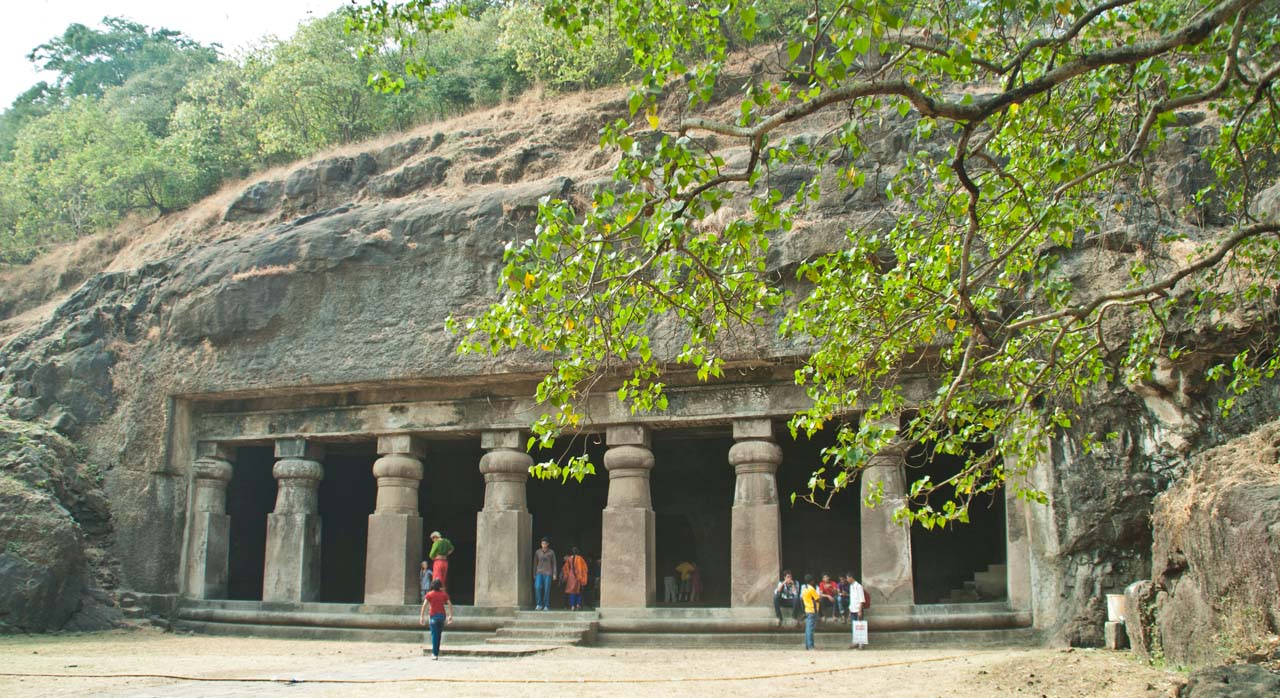
The Elephanta Caves, located near Mumbai, India, are a UNESCO World Heritage Site renowned for their rich historical, architectural, and religious significance. These ancient rock-cut caves are situated on Elephanta Island in the Arabian Sea, approximately 10 kilometers east of Mumbai’s coastline. The caves are a testament to India’s rich cultural heritage and provide a fascinating glimpse into its past.
The name “Elephanta” is believed to have been derived from the Portuguese term “Elefante,” which was used to describe a large stone elephant statue that once stood on the island. This statue has long been removed, but the caves themselves remain as a marvel of ancient craftsmanship and artistic expression.
The Elephanta Caves date back to around the 5th to 8th centuries, during the heyday of the Rashtrakuta dynasty. The site primarily consists of a complex of rock-cut temples and sculptures dedicated to Lord Shiva, one of the principal deities of Hinduism. The most prominent feature of the caves is a magnificent three-headed statue of Shiva, known as the Trimurti, which represents his roles as the creator, preserver, and destroyer of the universe.
The main cave, known as the Shiva Cave, houses the Trimurti sculpture and various other intricate carvings depicting mythological scenes, celestial beings, and intricate designs. The cave’s interior is adorned with beautifully carved pillars, corridors, and chambers that showcase the artistic skills of the craftsmen of that era.
Aside from the Shiva Cave, the Elephanta site also comprises several smaller caves dedicated to different Hindu deities. These caves showcase distinct architectural styles and artistic themes, including depictions of gods, goddesses, and mythological narratives.
The journey to the Elephanta Caves typically involves a short boat ride from Mumbai’s Gateway of India. Upon arriving at the island, visitors are greeted with lush green surroundings and the awe-inspiring entrance to the cave complex. The climb to the caves includes a series of steps that offer panoramic views of the island and the Mumbai skyline.
Throughout the years, the Elephanta Caves have attracted visitors from around the world, including archaeologists, art historians, and tourists seeking to explore India’s cultural heritage. While the site has suffered some weathering and damage over time, efforts have been made to preserve and restore the intricate carvings and structures.
The Elephanta Caves stand as a testament to the artistic and architectural achievements of ancient India, providing a unique window into the country’s religious and cultural history. They continue to be a place of fascination, exploration, and reverence, serving as a link between the past and the present for all who have the opportunity to visit.