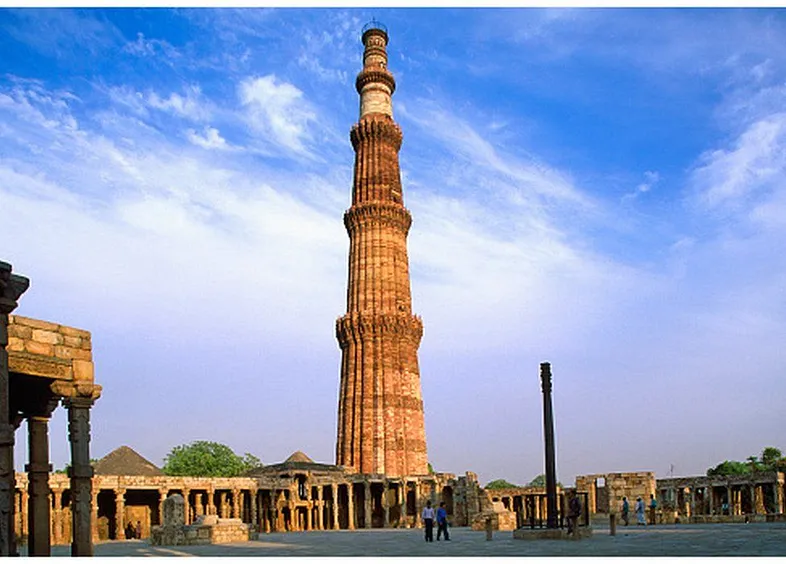
In the heart of Delhi stands a towering masterpiece of ancient architecture, the Qutub Minar. A UNESCO World Heritage Site, this magnificent monument captures the essence of India’s rich history and cultural heritage. As you explore its corridors and gaze up at its towering height, you become a part of a rich tapestry of human history that has left an indelible mark on the world.
The Qutb Minar, also spelled Qutub Minar and Qutab Minar, is a minaret and “victory tower” that forms part of the Qutb complex, which lies at the site of Delhi’s oldest fortified city, Lal Kot, founded by the Tomar Rajputs. Qutub Minar, a true testament to the marvels of the past.
A Towering Icon: The Qutub Minar, soaring to a height of 73 meters (240 feet), is the tallest brick minaret in the world. Built by Qutb-ud-din Aibak, the first ruler of the Delhi Sultanate, in the early 13th century, it stands as a symbol of the Muslim rule in India. The monument’s unique design features intricate carvings, decorative motifs, and ornate balconies, showcasing the mastery of Indo-Islamic architecture.
Historical Significance: The Qutub Minar carries a rich historical legacy, spanning over eight centuries. It was originally constructed as a victory tower to commemorate the establishment of Muslim rule in Delhi. The monument’s construction spanned several dynasties, witnessing additions and renovations over time. Today, it stands as a testament to the cultural and architectural fusion of Hindu and Islamic influences in India.
Architectural Marvels: The Qutub Minar complex is not limited to just the towering minaret. It also boasts several other impressive structures, including the Quwwat-ul-Islam Mosque, the Iron Pillar, and various tombs and ruins. The Quwwat-ul-Islam Mosque, constructed using materials from demolished Hindu and Jain temples, displays exquisite architectural details and intricate calligraphy. The Iron Pillar, standing adjacent to the mosque, is a marvel in itself, known for its corrosion resistance and intricate inscriptions.
Intricate Carvings and Calligraphy: The Qutub Minar and its associated structures are adorned with intricate carvings, verses from the Quran, and beautiful calligraphy. The exquisite craftsmanship on display reflects the artistic prowess of the artisans of that era. The carvings depict scenes from Hindu mythology, geometric patterns, and floral motifs, blending seamlessly with Arabic inscriptions and Islamic geometric designs. These intricate details add to the charm and beauty of the monument, leaving visitors in awe of the skilled craftsmanship of the past.
A Melting Pot of Culture: The Qutub Minar complex stands as a testament to the diverse cultural influences that shaped India’s history. The fusion of Hindu and Islamic architectural elements represents the cultural assimilation and syncretism that took place during that era. Visitors to the Qutub Minar can witness the harmonious coexistence of different artistic traditions, reflecting the multicultural fabric of India.
Serene Atmosphere and Green Surroundings: The Qutub Minar complex is set amidst lush green gardens, providing a serene and tranquil ambiance for visitors. The sprawling lawns, dotted with ancient ruins and historical structures, offer a peaceful retreat from the hustle and bustle of the city. Visitors can take leisurely walks, capture stunning photographs, and immerse themselves in the serene beauty of the surroundings.
The Qutub Minar stands as an architectural gem, reflecting the grandeur and magnificence of India’s past. It serves as a reminder of the rich cultural heritage and historical significance that permeates the country. As you explore the intricate carvings, marvel at the soaring minaret, and soak in the serenity of the surroundings, you can’t help but be transported back in time. The Qutub Minar encapsulates the essence of India’s architectural.