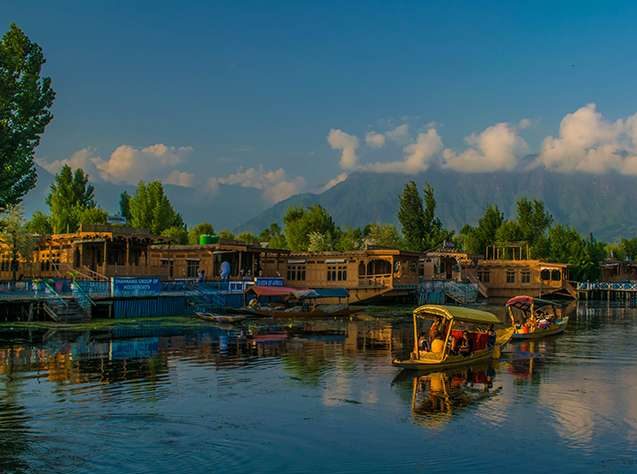
Dal Lake is a renowned and breathtakingly beautiful tourist destination situated in the enchanting Kashmir Valley in the Indian-administered region of Jammu and Kashmir. It is often referred to as the “Jewel in the Crown of Kashmir” due to its captivating natural beauty and cultural significance.
Stretching over an area of approximately 18 square kilometers, Dal Lake is one of the largest and most famous lakes in the region. Its crystal-clear waters are surrounded by majestic snow-capped mountains, lush greenery, and charming houseboats. The lake is fed by numerous mountain streams and remains serene and tranquil throughout the year, attracting visitors from far and wide.
One of the most iconic features of Dal Lake is the presence of beautifully decorated houseboats known as “shikaras.” These vibrant and intricately designed floating homes offer a unique and unforgettable experience to visitors. Exploring the lake on a shikara is a must-do activity, allowing you to soak in the mesmerizing views of the surrounding landscapes, floating gardens, and the distant Himalayan peaks.
The shores of Dal Lake are lined with Mughal-era gardens, known as “baghs,” which further enhance the scenic charm of the lake. These gardens, such as Shalimar Bagh and Nishat Bagh, are meticulously manicured and adorned with colorful flowers, fountains, and cascading terraces. They serve as popular picnic spots where tourists can relax and immerse themselves in the serene ambiance.
Dal Lake also holds significant cultural and historical importance. It has been an integral part of Kashmir’s heritage for centuries and has inspired numerous poets, artists, and writers. The lake is a reflection of the region’s rich culture and traditions, as seen in the vibrant floating markets where locals sell handicrafts, textiles, and fresh produce from their shikaras.
During winter, when the lake freezes over, Dal Lake transforms into a magical wonderland. Visitors can partake in activities such as ice-skating and enjoy the snowy landscapes. The annual “Shikara Festival” held on Dal Lake showcases the region’s vibrant culture through traditional music, dance, and boat races, attracting a large number of tourists.

However, it’s important to acknowledge that the region has faced periods of unrest and political challenges. It’s essential to stay updated on the local situation and follow travel advisories before planning a visit to Dal Lake.
Another fascinating aspect of Dal Lake is the floating gardens, locally known as “Rad” or “Roung.” These unique gardens are created by layering vegetation, such as soil, weeds, and decomposed organic matter, on floating beds of vegetation called “mar”. The farmers cultivate a variety of vegetables and flowers on these floating gardens, contributing to the local economy and providing a vibrant display of colors and aromas.
The lake is also home to several species of aquatic flora and fauna. Water lilies, lotus flowers, and water chestnuts are some of the aquatic plants that thrive in the lake’s ecosystem, adding to its natural charm. The lake supports a diverse range of bird species, including migratory birds that visit during winter, making it a paradise for birdwatching enthusiasts.
To enhance the experience of visitors, the tourism industry around Dal Lake offers a range of activities. Apart from shikara rides, tourists can also indulge in kayaking, canoeing, and paddleboarding, allowing them to explore the lake at their own pace. In the evening, as the sun sets over the mountains, the lake transforms into a magical sight, with the reflection of the vibrant houseboats and the surrounding landscapes creating a picturesque setting.
Over the years, Dal Lake has become a popular filming location for Bollywood movies, further adding to its fame and allure. Its ethereal beauty has attracted filmmakers from across the globe, who have captured its essence on the silver screen.
However, it’s important to mention that due to its popularity, Dal Lake faces certain environmental challenges. Pollution and encroachments have put a strain on its delicate ecosystem. Efforts are being made by local authorities and organizations to preserve and protect the lake’s pristine beauty and ensure its sustainability for future generations.
However, it’s important to mention that due to its popularity, Dal Lake faces certain environmental challenges. Pollution and encroachments have put a strain on its delicate ecosystem. Efforts are being made by local authorities and organizations to preserve and protect the lake’s pristine beauty and ensure its sustainability for future generations.
