In the annals of scientific history, there are few stories as compelling and as controversial as that of Lise Meitner, often referred to as the “Mother of the Atomic Bomb.” Her role in the development of the theory of nuclear fission, a process critical to the creation of the atomic bomb, is undeniable. However, her remarkable contributions went unrecognized by the Nobel Committee. The reasons for this omission are rooted in the complex interplay of her Jewish heritage and her gender in a world dominated by discrimination.
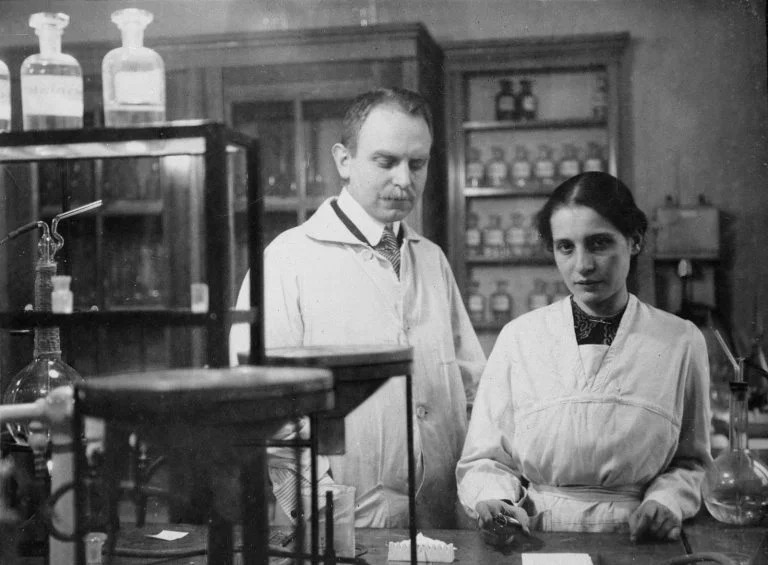
Lise Meitner, an Austrian-born physicist, was a lifelong collaborator with Otto Hahn, a German chemist. Together, they conducted pioneering research in the field of nuclear physics. In 1939, Hahn and Fritz Strassmann, a chemist working with him, unwittingly stumbled upon the phenomenon of nuclear fission. This groundbreaking discovery, as mentioned in the film “Oppenheimer,” was the pivotal moment that set the stage for the Manhattan Project, the clandestine American initiative to develop nuclear weapons.
Despite her invaluable contributions to the field, Meitner’s name is often absent from discussions about nuclear fission and the atomic bomb. The reason behind this omission is two-fold.
First, Meitner’s identity as a Jewish woman was a significant factor. At the time, anti-Semitic sentiments were prevalent in Europe, especially in Germany where she had worked for much of her career. As the Nazis tightened their grip on Germany, Meitner, being of Jewish descent, was increasingly marginalized and isolated. In 1938, she fled Germany and sought refuge in Sweden, where she continued her research.
Second, gender discrimination compounded her challenges. Women in the sciences during that era faced formidable barriers, and Meitner was no exception. She not only had to contend with the broader societal bias against women in scientific roles but also within the scientific community itself.
Despite the obstacles, Meitner persevered and played an instrumental role in explaining the physics behind nuclear fission. In collaboration with her nephew, Otto Frisch, she formulated the first theoretical explanation of the process. Meitner’s insights laid the foundation for further research and development of nuclear weaponry.
However, when Otto Hahn received the Nobel Prize in Chemistry in 1944 for the discovery of nuclear fission, Meitner’s name was conspicuously absent from the list of laureates. The Nobel Committee’s decision to exclude her was, by all accounts, an egregious oversight. The scientific community and the world at large recognized the injustice.
The case of Lise Meitner underscores the discrimination faced by Jewish scientists and women during that time, not just within their own countries but also on the global stage. Her contributions were ultimately acknowledged, albeit belatedly, as her work paved the way for groundbreaking developments in nuclear physics. Yet, the Nobel Prize, a prestigious accolade in the world of science, eluded her.
Throughout history, many scientists, especially women and those from underrepresented backgrounds, have faced substantial obstacles on their path to recognition. Meitner’s story serves as a reminder that it is essential to not only celebrate scientific achievements but also to address systemic biases that have historically affected the recognition of deserving individuals. Her omission from the Nobel Prize is a haunting reminder of the biases that have historically plagued the scientific world.
Lise Meitner’s legacy lives on not only through her scientific achievements but also as a symbol of the injustices that have historically existed in the scientific community. Her story inspires us to strive for a more equitable and inclusive future, where scientific discoveries are celebrated regardless of the gender, ethnicity, or background of the scientists behind them. It is a reminder that science is a collective human endeavor, and it is in our collective interest to ensure that all voices are heard and all contributions are recognized.
It is clear that Lise Meitner was a pioneer who overcame formidable obstacles to make significant contributions to our understanding of nuclear physics. Her story serves as a poignant reminder of the importance of acknowledging and rectifying past injustices, as well as the enduring need to promote diversity and gender equality in the field of science.