A prominent Canadian Sikh leader met a tragic end when he was allegedly assassinated under suspicious circumstances. The killing sent shockwaves through both the Canadian Sikh community and the international Indian diaspora.
The victim, a known Sikh separatist, was reportedly targeted by individuals who Canadian authorities have described as agents linked to the Indian government. This shocking revelation has raised a plethora of questions and concerns about the potential involvement of foreign governments in acts of violence on foreign soil, as well as the impact of such incidents on the relationships between nations.
In 2023, the killing of a prominent Canadian Sikh leader, allegedly carried out by individuals Canada has identified as linked to the Indian government, has unfolded amidst deepening divisions in the global Indian diaspora.
The Gurdwara Dasmesh Darbar, a Sikh temple situated in Brampton, Ontario, a Toronto suburb with a diverse Indian diaspora, has witnessed occasional conflicts arising from concerns related to Hindu nationalism.
Reported by Norimitsu Onishi from Montreal and Vjosa Isai from Brampton, this issue came to the forefront on September 30, 2023.
In recent times, lecture halls at universities in Canada and the United States have become arenas for intense debates and clashes involving proponents and critics of Hindu nationalism, often escalating to threats of violence and even death. Furthermore, Sikh and Hindu temples in Canada and Australia have suffered acts of vandalism, marked by slogans reminiscent of India’s longstanding divisions.
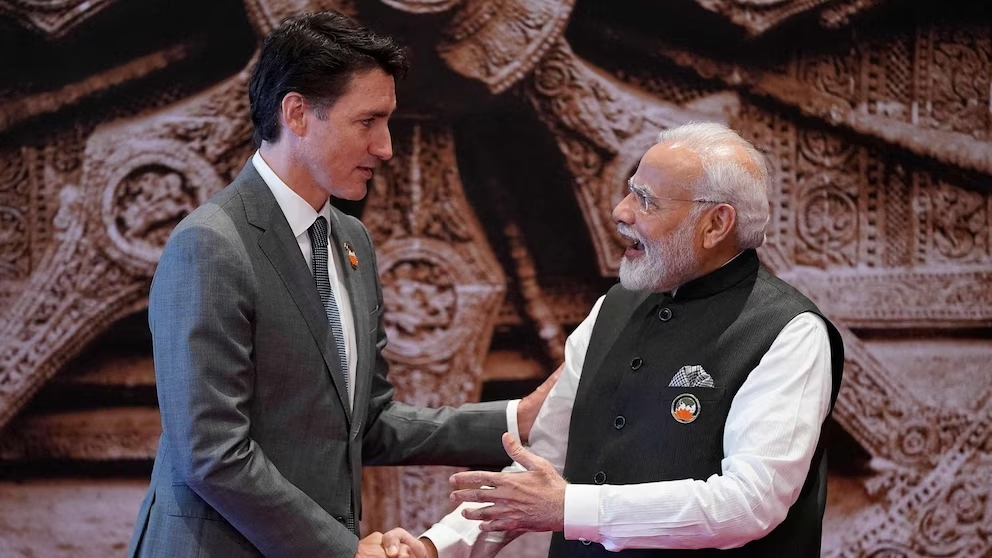
The Canadian government’s extraordinary claim, pinpointing Indian government involvement in the meticulously executed assassination of a Canadian Sikh separatist in Vancouver, has shone a spotlight on the growing tensions within the extensive Indian diaspora. These tensions mirror the divisions within India, exacerbated by Prime Minister Narendra Modi’s Hindu-centric policies.
The Canadian Sikh leader’s assassination is not only a significant event within the Canadian Sikh community but also an international incident that underscores the complexities of global politics, particularly in relation to diaspora communities and their connections to their countries of origin. The case has prompted investigations, debates, and discussions that extend well beyond Canada’s borders, emphasizing the far-reaching consequences of actions that are alleged to involve the interference of foreign governments in the lives of individuals living abroad.
Modi’s policies, along with an increasing intolerance of scrutiny, have transcended Indian borders, seeping into Indian communities worldwide. Consequently, historical divisions among Hindus, Muslims, Sikhs, and various castes have been reignited. These divisions have manifested in city councils, school boards, cultural festivities, and academic circles, causing ripple effects that extend well beyond India’s borders. The global Indian diaspora finds itself grappling with these divisions and the complex interplay between nationalism, identity, and belonging in the modern world.