Maori culture is a vibrant and captivating facet of New Zealand’s cultural landscape. With a history spanning over a thousand years, the Maori people have left an indelible mark on the country, from their unique language, customs, and art to their deep connection with the land and sea. Maori culture, delving into its history, traditions, and contemporary relevance.
The Origins of Maori Culture
The Maori are Polynesian descendants who arrived in New Zealand around 800 years ago. Their ancestors navigated vast stretches of the Pacific Ocean in waka (canoes) to settle Aotearoa, as they call it, which means “Land of the Long White Cloud.” This epic journey, filled with celestial navigation and extraordinary seafaring skills, is an essential part of Maori identity.
Language: Te Reo Maori
At the heart of Maori culture lies Te Reo Maori, the Maori language. It’s more than just words; it’s a repository of cultural knowledge, stories, and identity. Efforts to revive and preserve the language have gained momentum in recent years, making it an integral part of Maori culture’s resurgence. The language is both beautiful and intricate, with unique sounds and meanings that reflect the Maori worldview.
Artistry and Symbolism
Maori art is renowned for its intricate designs and deep symbolism. Traditional Maori tattoos, known as moko, are a striking example. Moko isn’t merely decorative; it tells the wearer’s life story, achievements, and social standing. In addition to tattoos, Maori art is characterized by wood and bone carvings, woven flax garments, and beautiful greenstone (pounamu) jewelry.
Haka and Waiata
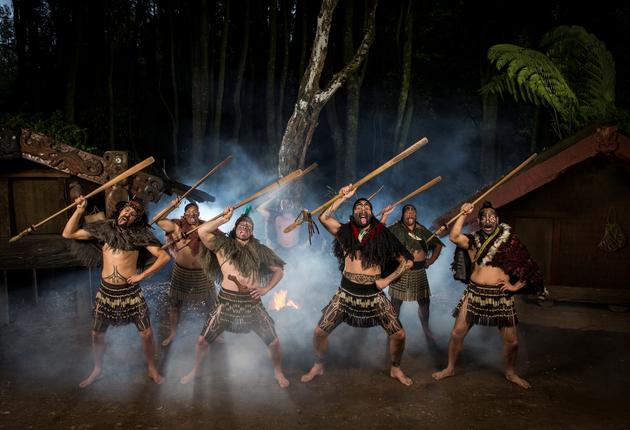
Perhaps the most internationally recognized aspects of Maori culture are the haka and waiata. The haka is a powerful, rhythmic dance that combines fierce facial expressions, body movements, and chanting. While it’s famously performed by the All Blacks, New Zealand’s national rugby team, the haka is an essential part of Maori culture, used to welcome guests, express emotions, and commemorate important events.
Waiata refers to Maori songs and chants, which play a significant role in storytelling and cultural preservation. Through waiata, generations have passed down legends, histories, and knowledge, ensuring the continuity of Maori culture.
Whakapapa and Whanau
At the heart of Maori society lies the concept of whakapapa, which means genealogy or family lineage. Understanding one’s whakapapa is crucial in Maori culture, as it defines a person’s connection to their ancestors and the land. Whanau, or family, is the cornerstone of Maori society, providing support, guidance, and a sense of belonging.
Contemporary Relevance
Maori culture is not a relic of the past but a living, evolving entity. Today, Maori customs and values play a vital role in New Zealand’s national identity. The Treaty of Waitangi, signed in 1840 between Maori chiefs and the British Crown, continues to be a subject of discussion and reconciliation, highlighting the importance of honoring the past while building a shared future.
Maori culture is a treasure trove of traditions, artistry, and wisdom that continues to flourish in the modern world. It’s roots are deep, and its branches reach out to touch every aspect of life in New Zealand. Whether through the mesmerizing haka, the profound meanings of Te Reo Maori, or the intricate beauty of Maori art, this culture offers a profound lesson in resilience and the enduring power of heritage. Discovering Maori culture is not just a journey through history but an immersion into a vibrant, dynamic, and living tradition that enriches the fabric of New Zealand and beyond.