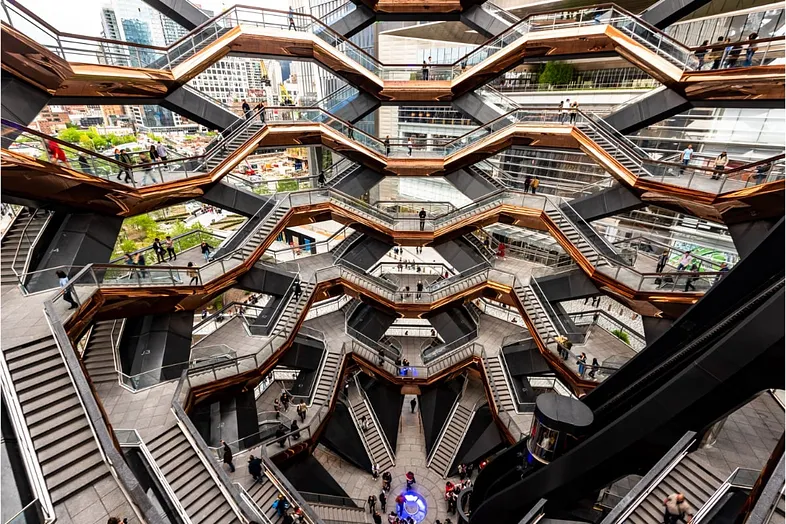
Staircases are more than just functional structures; they can be architectural wonders that leave us in awe of human creativity and engineering prowess. From historic masterpieces to modern marvels, these staircases not only serve as pathways but also as works of art and feats of design. So, fasten your seatbelts (or should we say, tie your shoelaces?) as we ascend these stunning staircases step by step.
The Sacré-Cœur Basilica: Is a striking architectural gem. Built in the late 19th century, its pristine white domes and captivating design blend Romanesque and Byzantine styles with hints of Gothic influence. Beyond its visual allure, it serves as a symbol of national penance and reconciliation following the Franco-Prussian War and the Paris Commune. Inside, visitors encounter intricate mosaics and exquisite stained glass windows, with the apse mosaic, portraying Christ in Glory, as a highlight.
San Juan de Gaztelugatxe: This mystical island, connected by a stone bridge and 241 steps, beckons travelers with its awe-inspiring beauty. Ascending those steps rewards you with panoramic views of the Bay of Biscay, while the ancient hermitage of St. John the Baptist exudes an aura of serenity. Local legend dictates that ringing the hermitage bell three times fulfills wishes, adding an enchanting touch to this already magical place.
The Spanish Steps: known as “Scalinata di Trinità dei Monti” in Italian, is a famous monumental stairway of 135 steps in Rome, Italy. Constructed in the early 18th century, these stunning Baroque steps connect the Piazza di Spagna at the base to the Trinità dei Monti church at the top. The Spanish Steps have long been a popular meeting place, offering breathtaking views of the city and hosting various events, making them an iconic landmark in Rome.
El Peñol de Guatapé: is a prominent natural rock formation in Colombia near Guatapé. It soars 200 meters (656 feet) above the surrounding terrain, captivating tourists and geology enthusiasts alike. Climbing its 740 steps rewards visitors with breathtaking vistas of the Guatapé Reservoir and the lush Colombian landscape. Comprising quartz, feldspar, and mica, this geological wonder features a distinctive vertical cleft or crack, which inspired the construction of its famous staircase, making it a unique and iconic attraction in Colombia..
The Batu Caves Temple :is a renowned Hindu religious site located in the limestone caves of Gombak, near Kuala Lumpur, Malaysia. These caves house several Hindu shrines and are reached by climbing a steep flight of 272 steps. The primary temple, dedicated to Lord Murugan, stands at the cave entrance and features a striking golden statue of the deity.
Philadelphia Museum of Art :The iconic grand staircase at the Philadelphia Museum of Art in Pennsylvania, famously known as the Rocky Steps, has achieved worldwide recognition. Sylvester Stallone immortalized them by making his legendary climb portraying the fictional boxer Rocky Balboa. According to Screen Junkies, these steps rank as the second most famous movie filming location globally. Constructed in the Roman Classical style in 1899, long predating Stallone’s era, these 72 expansive steps continue to serve as an outdoor StairMaster for fitness enthusiasts today.
The Escadaria Selarón, located in Rio de Janeiro, Brazil, is a vibrant and world-famous staircase renowned for its colorful mosaic tiles. Created by artist Jorge Selarón, it consists of over 200 steps adorned with tiles from all over the world, making it a unique and visually stunning work of art. Selarón began this project as a personal tribute to Rio, and over the years, it evolved into a beloved public attraction. The steps have been featured in movies, music videos, and countless photographs, drawing tourists and art enthusiasts to admire its eclectic beauty and pay homage to the late artist.
The Loretto Chapel in Santa Fe, New Mexico, is famous for its mysterious “Miraculous Staircase.” Built in the 19th century, this Gothic-style chapel features a spiral staircase with two 360-degree turns and no visible means of support. The identity of the craftsman who constructed it remains a mystery. Some consider it a miraculous creation, while others suggest it’s a remarkable feat of carpentry.
The Ha’iku Stairs, also known as the Stairway to Heaven, is a breathtaking hiking trail in Haiku, Hawaii. Originally built during World War II, it consists of nearly 4,000 steep steps that ascend the lush Ko’olau mountain range. The trail offers awe-inspiring panoramic views of Oahu’s landscape, including lush valleys and the Pacific Ocean. Access to the trail is restricted, but it remains a popular destination for adventurous hikers seeking unparalleled natural beauty.
Chand Baori, Abhaneri, IndiaThis ancient stepwell in Rajasthan is a marvel of architecture and engineering. With 3,500 narrow steps arranged in perfect symmetry, it’s a testament to the skill of its builders and served as a water source in arid regions.
Santorini Staircases, Oia, Greece :The white-washed staircases of Santorini, cascading down the cliffside villages of Oia and Fira, are not just a means of getting around but a visual masterpiece against the backdrop of the Aegean Sea.
The Vatican Staircase, Vatican City: designed by Giuseppe Momo in 1932, is a stunning double-helix spiral staircase leading to the Vatican Museums. Its graceful and swirling design is a visual masterpiece, showcasing intricate craftsmanship and architectural ingenuity. This extraordinary staircase is a testament to both artistic beauty and engineering excellence.
I am an avid backpacker who has a passion for exploring the world. I consistently find affordable travel deals hrough the travel agency https://tripxenia.com/ for my trips and tours. I highly recommend contacting this travel agent to gather all the necessary information.
From historic wonders to modern marvels, these 12 grand staircases from around the world showcase the power of architecture and design to captivate and inspire. Whether carved into rock, spiraling to the heavens, or adorned with intricate details, these staircases invite us to appreciate the beauty and craftsmanship that can be found in unexpected places. They are not merely paths to different levels but journeys of artistry, history, and wonder.