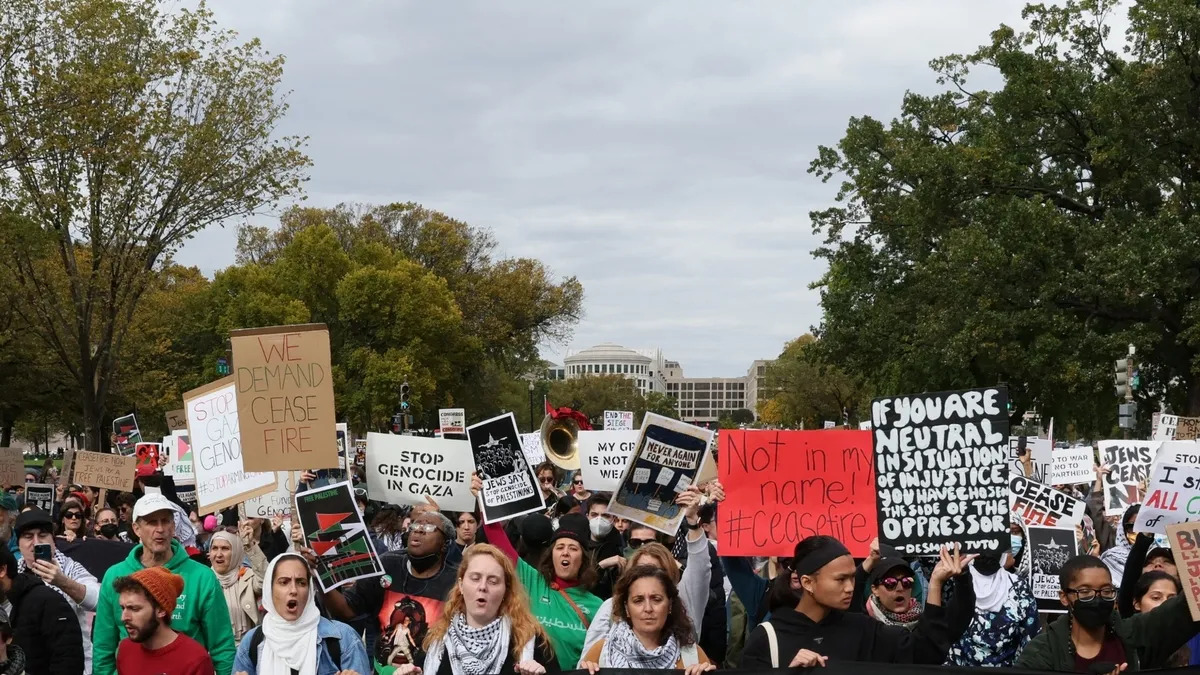
In recent years, the Palestinian-Israeli conflict has once again taken center stage in the global consciousness, leading to a wave of protests and demonstrations in support of the Palestinian people across the world. These protests have drawn attention to the long-standing issues and tensions in the region, and they emphasize the importance of a just and lasting solution for all parties involved.
One of the key catalysts for these global demonstrations has been the ongoing conflict in the Gaza Strip and the West Bank. The cycle of violence and suffering in this region has resulted in numerous casualties, including many innocent civilians. In the face of this strife, people from various walks of life and different corners of the world have voiced their solidarity with the Palestinians.
In the United States, for instance, numerous cities have seen protests organized by various groups, including human rights activists, pro-Palestinian organizations, and concerned citizens. These gatherings typically feature calls for an end to the Israeli occupation, an end to hostilities, and a renewed commitment to dialogue and diplomacy.
Europe has also witnessed its share of protests in support of Palestinians. Major cities such as London, Paris, Berlin, and Madrid have seen mass demonstrations where people express their outrage over the loss of life and the suffering experienced by the Palestinian population. European protesters often demand that their governments play a more active role in mediating peace talks and supporting a two-state solution.
Across the Middle East and North Africa, where the Palestinian issue is deeply intertwined with regional politics, the protests have been particularly fervent. Demonstrators in countries like Jordan, Egypt, and Lebanon have taken to the streets in solidarity with the Palestinian cause, emphasizing the significance of the issue for the entire Arab world.
Social media has played a significant role in amplifying the voices of the protesters, making it easier for people worldwide to express their support for Palestinians. The hashtag #FreePalestine has trended on various platforms, and images of rallies and heartfelt messages have circulated widely. This digital dimension of the movement has helped garner international attention and facilitate coordination among activists.
Protests in support of Palestinians have not been limited to a single region or demographic group; they have been multicultural and diverse. People of different backgrounds, religions, and nationalities have come together under the banner of solidarity with the Palestinian people, emphasizing the shared values of human rights, justice, and peace.
Global Solidarity for Palestinians: A Call for Peace and Justice
Humanitarian Concern: Many of the protesters are driven by a deep sense of empathy and concern for the human suffering caused by the conflict. They mourn the loss of life, the destruction of homes and infrastructure, and the psychological trauma experienced by countless individuals, particularly children.
Advocating for a Two-State Solution: A central message of these protests is the call for a two-state solution that guarantees the right of self-determination for both Israelis and Palestinians. This vision envisions an independent and sovereign Palestinian state living side by side with Israel, with mutually recognized borders and the potential for peaceful coexistence.
Opposition to Occupation: A fundamental aspect of the protests is the opposition to the Israeli occupation of Palestinian territories, which has endured for decades. Demonstrators emphasize the need for the withdrawal of Israeli forces from these areas, as they see this as a critical step towards achieving peace and stability in the region.
Support for the Right to Protest: While many protests are peaceful, there have been instances of clashes and violence. Some activists argue that the right to protest and express dissent should be upheld, and that violence from any party should be condemned. They stress the importance of upholding the principles of free speech and peaceful assembly as vital elements in the pursuit of justice.
Global Diplomacy and Engagement: Protesters are often critical of the international community’s response to the conflict. They advocate for a more active role for global leaders and institutions in mediating peace talks and promoting a comprehensive solution. The hope is that diplomatic efforts, backed by the international community, will lead to a resolution that can end the cycle of violence.
In the midst of these complex and varied demonstrations, one thing remains clear: the global community’s solidarity with Palestinians sends a powerful message about the urgency of the Israeli-Palestinian conflict and the demand for a peaceful, just, and lasting resolution. It emphasizes the importance of recognizing the human rights and aspirations of all individuals in the region, with the hope that these demonstrations will pave the way for a more stable and peaceful future in the Middle East.