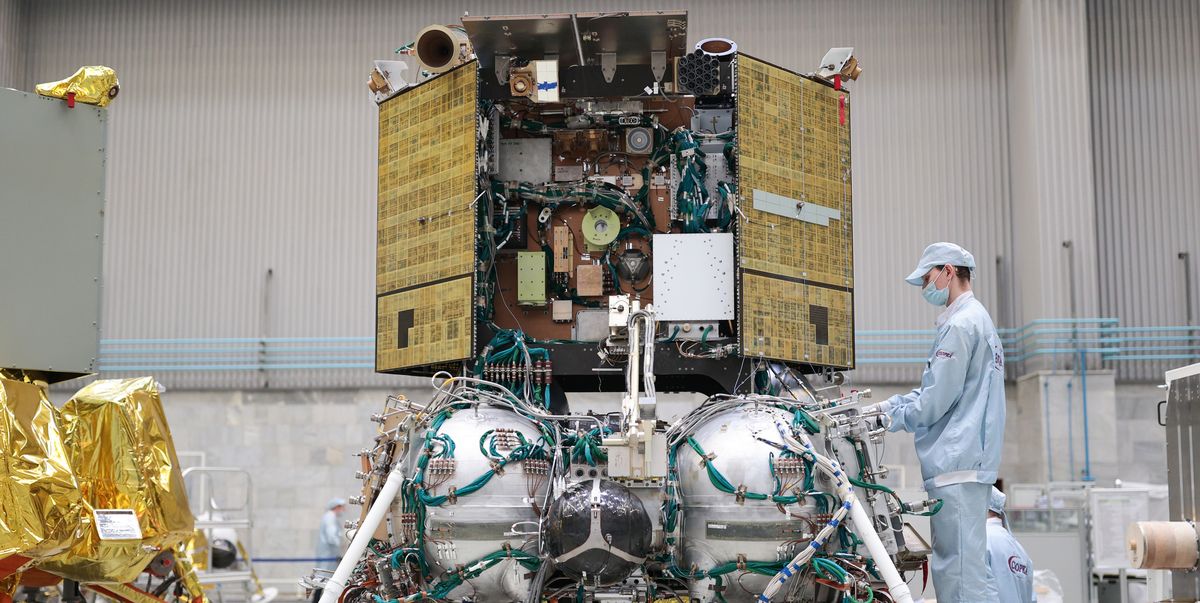
In a recent turn of events, Russia’s long-anticipated robotic moon mission, the country’s first in nearly half a century, has encountered a significant setback. The ambitious venture aimed to rekindle Russia’s space exploration legacy, but unfortunately, it faced challenges that prevented its successful completion. This article delves into the details of the mission, the setbacks encountered, and the implications for Russia’s space ambitions.
The Mission and Its Significance
Russia’s space agency, Roscosmos, embarked on an ambitious journey to the moon with the mission to deploy a robotic lander. This endeavor held special significance as it marked Russia’s return to lunar exploration after an absence of almost 50 years. The primary goals of the mission included conducting scientific experiments, collecting data about the lunar surface, and showcasing the country’s technological prowess on the global stage.
The Setback and Mission Failure
However, the mission faced a major setback when communication with the robotic lander was lost shortly after its successful landing on the moon’s surface. The lander was expected to carry out a series of experiments and transmit valuable data back to Earth, but the abrupt loss of contact dashed these hopes. Despite the meticulous planning and efforts put into the mission, technical challenges seemed to have compromised its success.
Technical Challenges and Lessons
The failure of Russia’s robotic moon mission serves as a reminder of the inherent complexities and risks associated with space exploration. The unforgiving environment of space demands precision engineering and cutting-edge technology to ensure the success of any mission. The setback highlights the importance of rigorous testing, redundancy systems, and preparedness for unexpected situations in such ventures.
Impact on Russia’s Space Ambitions
The mission’s failure raises questions about the future of Russia’s space ambitions. As other nations, including private companies, make significant strides in space exploration, Russia’s space agency faces increased pressure to stay competitive. The setback could lead to a renewed focus on refining technological capabilities and addressing issues that contributed to the mission’s failure.
International Collaboration and the Way Forward
In an era of international cooperation in space exploration, Russia’s setback can also serve as an opportunity for collaboration. The global space community has often come together to share expertise, knowledge, and resources to overcome challenges. Learning from each other’s failures and successes can contribute to the overall advancement of space exploration.
Reassessing Strategies and Technological Advancements
The setback faced by Russia’s robotic moon mission prompts a reevaluation of strategies and a push for technological advancements. Roscosmos and its team of scientists and engineers must conduct a thorough post-mortem analysis of the mission, identifying the root causes of the communication failure. This process can lead to the refinement of protocols, systems, and equipment to mitigate similar issues in future missions.
Public Perception and Government Support
The mission’s failure also carries implications for public perception and government support of space exploration initiatives. Public interest and national pride often play a significant role in shaping a country’s space agenda. While setbacks are an inherent part of exploration, transparent communication about the challenges faced, along with clear plans for improvement, can maintain public trust and garner continued government backing.
Learning from Past Successes and Failures
Russia’s history in space exploration is marked by both historic successes and failures. From launching the first human, Yuri Gagarin, into space to facing setbacks like this recent mission, the country has seen the spectrum of possibilities that space exploration presents. By analyzing both successes and failures, Roscosmos can draw on the wealth of experience to make informed decisions moving forward.
Encouraging Innovation and Research
The setback can also serve as a catalyst for stimulating innovation and research within Russia’s space sector. As the space industry becomes increasingly competitive, investing in research and development is essential to remain at the forefront of technological advancements. Encouraging partnerships between academia, industry, and government agencies can lead to groundbreaking discoveries that reshape the trajectory of future missions.
Global Collaboration in Lunar Exploration
As multiple nations and private entities gear up for lunar exploration missions, collaboration becomes crucial. International projects, like the Lunar Gateway initiative led by NASA, provide opportunities for nations to pool resources, share expertise, and jointly tackle the challenges of deep space exploration. Russia’s experience, both in successes and setbacks, can contribute to these collaborative efforts.
Looking Ahead with Determination
The setback faced by Russia’s robotic moon mission should not deter the nation from pursuing its space exploration ambitions. Space exploration is inherently risky, and setbacks are an integral part of the journey toward understanding and conquering the cosmos. Learning from failures, embracing innovative solutions, and fostering a culture of resilience can propel Russia toward future successes in space exploration.
The setback in Russia’s robotic moon mission occurred due to technical challenges that led to a loss of communication with the robotic lander shortly after it successfully landed on the lunar surface. The exact reasons for the communication failure are still being investigated, but it highlights the intricate and demanding nature of space exploration.
Russia’s recent setback in its robotic moon mission serves as a poignant reminder of the complexities and challenges inherent in space exploration. While the mission faced unforeseen challenges resulting in communication failure, it also presents an opportunity for reflection, growth, and collaboration. By dissecting the mission’s failure, implementing improvements, and fostering innovation, Russia can continue its journey to the stars with renewed determination and a commitment to expanding humanity’s reach beyond our home planet.