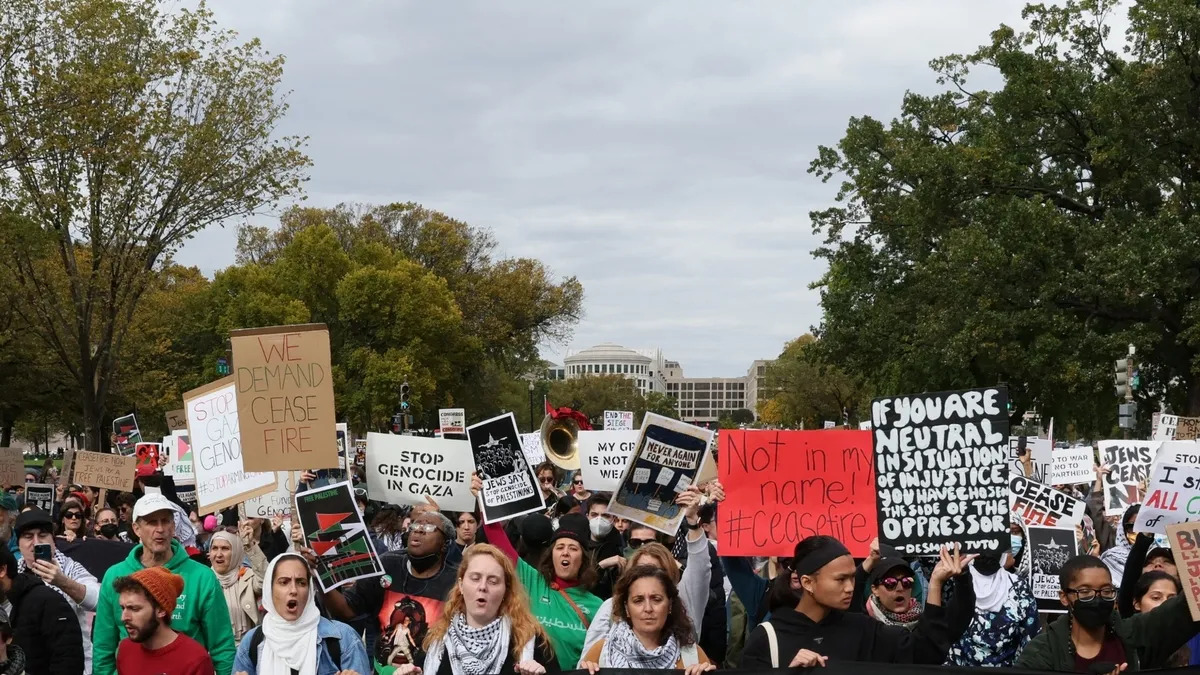
The Israel-Palestine conflict is a long-standing and deeply rooted geopolitical dispute primarily centered around competing national and territorial claims in the region. Here are some key factors contributing to the conflict:
Historical Background: The conflict has its roots in the late 19th and early 20th centuries when Jewish immigrants began to settle in Palestine, then part of the Ottoman Empire. The Zionist movement, seeking a Jewish homeland, and the aspirations of Arab Palestinians for self-determination clashed as both groups laid claim to the same land.
British Mandate: After World War I, the League of Nations granted Britain a mandate to govern Palestine. During this time, tensions between Jewish and Arab communities increased due to competing interests and demographic changes resulting from Jewish immigration.
United Nations Partition Plan (1947): In 1947, the United Nations proposed a partition plan that would have created separate Jewish and Arab states within Palestine. The plan was accepted by Jewish leaders but rejected by Arab leaders, leading to violence and the first Arab-Israeli war in 1948.
Establishment of Israel: In 1948, Israel declared its independence, which led to a war with neighboring Arab states. The outcome of this war significantly altered the borders and demographics of the region, leaving many Palestinian refugees and a continued sense of dispossession among Palestinians.
Ongoing Territorial Disputes: The conflict involves disputes over territory, including the West Bank, Gaza Strip, and East Jerusalem, which Israel captured during the 1967 Six-Day War. Palestinians seek an independent state in these territories, while Israel has built settlements in the West Bank, which is a major point of contention.
Security Concerns: Israel cites security concerns, including the threat of terrorism, as a reason for maintaining control over certain areas in the West Bank and Gaza Strip.
Religious and Cultural Significance: Jerusalem is a particularly sensitive issue due to its religious importance to Jews, Christians, and Muslims. Control over Jerusalem is a central point of contention.
International Involvement: The Israel-Palestine conflict has drawn significant international attention and involvement, with various countries, organizations, and individuals attempting to mediate and influence the situation.
Failed Peace Efforts: Numerous peace initiatives and negotiations have taken place over the years, such as the Oslo Accords and the Camp David Summit, but a lasting resolution has proven elusive.
Humanitarian Concerns: The conflict has had a profound impact on the lives of both Israelis and Palestinians, resulting in violence, displacement, and humanitarian crises
The Israel-Palestine conflict is complex and deeply rooted in historical, political, and cultural factors. It continues to be a source of tension in the region and a challenge for international diplomacy and peace efforts. Efforts to resolve the conflict typically involve addressing issues related to borders, refugees, security, and the status of Jerusalem, among others.