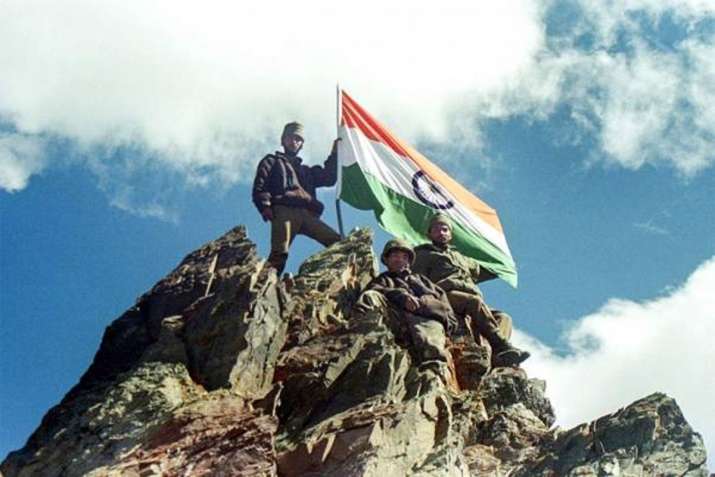
The Kargil War, fought between India and Pakistan in the summer of 1999, remains a significant chapter in the history of the Indian subcontinent. Explored in the rugged and remote terrain of the Himalayan region of Kargil in the Indian state of Jammu and Kashmir, this conflict emerged as a testament to the complexities and challenges of the regional geopolitics. This article delves into the background, the course of events, and the aftermath of the Kargil War, shedding light on the repercussions it had on both nations and their relations with the international community.
Background: To understand the Kargil War, one must delve into the intricate history of India and Pakistan, marked by territorial disputes and political tensions since their partition in 1947. The region of Jammu and Kashmir has consistently been at the heart of these tensions, with both nations laying claim to the territory. In 1999, the Kargil district of Jammu and Kashmir became the epicenter of a military confrontation that threatened to escalate into a full-blown war.
Course of Events: The Kargil War unfolded in the wake of Pakistan’s covert infiltration of armed militants and regular soldiers across the Line of Control (LoC) in the Kargil sector. The operation, known as “Operation Badr” by Pakistan, aimed to seize strategic positions along the LoC and threaten the Indian control of the region. This move took India by surprise and resulted in a fierce military response.
The Indian armed forces, backed by diplomatic efforts to isolate Pakistan internationally, launched “Operation Vijay” to push back the intruders and regain control of the captured peaks. The conflict was characterized by high-altitude warfare, with Indian troops displaying remarkable courage and determination. It was a grueling battle fought under extreme conditions, with soldiers often battling not only the enemy but also the harsh Himalayan terrain.
The war culminated in July 1999 with India regaining control of the territory. The loss of life on both sides was significant, and the conflict highlighted the perils of nuclear-armed nations engaging in conventional warfare.
Aftermath: The Kargil War had far-reaching consequences. In India, it was seen as a test of the nation’s resolve to protect its territory and was met with widespread national pride. The conflict also exposed the limitations of international mediation, as efforts to resolve the crisis through diplomatic means yielded limited results.
For Pakistan, the Kargil War had diplomatic and strategic costs, with its actions being widely condemned by the international community. It also led to a period of introspection regarding the use of militancy as a tool of state policy.
Internationally, the Kargil War underscored the volatility of the Indo-Pakistani relationship and raised concerns about the potential for nuclear escalation in regional conflicts.
The Kargil War serves as a stark reminder of the enduring tensions between India and Pakistan and the potential for conflict in the region. It was a brutal and costly confrontation that tested the resolve and capabilities of both nations. Ultimately, it highlighted the importance of diplomacy, conflict resolution, and the need for peaceful coexistence in a region of immense geopolitical significance. While the scars of the Kargil War remain, it is a chapter in history that serves as a cautionary tale for the entire world.

