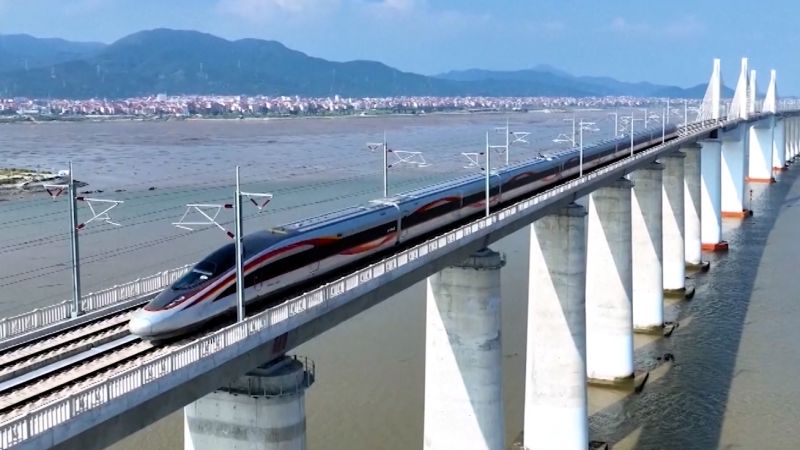
China has once again set a remarkable precedent in the realm of transportation infrastructure with the inauguration of the world’s first high-speed overwater bullet train line. Spanning 22.6 miles (36.5 kilometers), this engineering marvel connects the bustling metropolis of Shanghai with the picturesque coastal city of Ningbo.
As a testament to China’s commitment to innovation and progress, this ambitious project showcases the nation’s ability to overcome complex challenges and redefine the boundaries of modern transportation. We will delve into the details of this extraordinary achievement, exploring its significance, the technological prowess behind it, and the potential impact on the region’s economy and connectivity.
The Significance of the Shanghai-Ningbo Overwater Bullet Train Line The Shanghai-Ningbo overwater bullet train line marks a significant milestone in China’s extensive high-speed rail network. It not only provides a rapid and convenient mode of transportation for commuters but also symbolizes China’s determination to push the boundaries of infrastructure development. Here are some key aspects of its significance:
Cutting-Edge Technology: The construction of this high-speed overwater rail line showcases China’s expertise in engineering and infrastructure. It necessitated the development of specialized technologies to ensure safety and efficiency.
Travel Time: Traveling between Shanghai and Ningbo used to take over four hours by traditional train. With the new bullet train line, the journey is shortened to just one hour, dramatically improving connectivity.
Boosting Regional Development: Improved connectivity between these two economic powerhouses fosters economic development in the region. It encourages business activities, tourism, and cultural exchanges.The Technological Marvel (300 words): The Shanghai-Ningbo overwater bullet train line is a testament to China’s engineering prowess. Here are some of the remarkable technological features that make this project stand out:
Elevated Tracks: To traverse the vast Hangzhou Bay, engineers constructed elevated tracks supported by an intricate network of pillars. This innovative design ensures stability and minimizes environmental impact.
Reinforced Infrastructure: The train line incorporates state-of-the-art materials and construction techniques to withstand harsh weather conditions, including typhoons and tidal fluctuations.
Safety Measures: Safety was a top priority in the design and construction. Advanced monitoring systems continuously assess track conditions, while stringent safety protocols are in place to ensure passenger well-being.
High-Speed Trains: The Shanghai-Ningbo line features China’s CRH series of high-speed trains, capable of reaching speeds of up to 217 mph (350 km/h). These trains offer passengers a comfortable and efficient travel experience.
Economic and Social Impact : The Shanghai-Ningbo overwater bullet train line is poised to have a substantial impact on the region’s economy and society:
Economic Growth: Enhanced connectivity between these two economic hubs promotes trade and investment, fostering economic growth in both cities and the surrounding areas.
Tourism Boost: The quicker and more convenient travel options are expected to boost tourism, as visitors can explore the cultural, historical, and scenic attractions in Shanghai and Ningbo with ease.
Environmental Benefits: The high-speed rail line is an eco-friendly alternative to traditional transportation methods, reducing the carbon footprint associated with travel between these cities.
ChinaBulletTrain Shorter commutes and easier access to job opportunities in both cities improve the quality of life for residents. It also encourages talent mobility between the two regions.
China’s accomplishment in constructing the world’s first high-speed overwater bullet train line between Shanghai and Ningbo is a testament to the nation’s commitment to innovation and progress. This remarkable engineering marvel not only significantly reduces travel time but also stimulates economic development, fosters tourism, and enhances the overall quality of life for residents in the region. It exemplifies China’s ability to tackle complex challenges, pushing the boundaries of modern transportation infrastructure. As the nation continues to invest in cutting-edge technologies and infrastructure projects, it sets a global standard for innovation and progress, inspiring nations around the world to strive for similar advancements in transportation and connectivity.