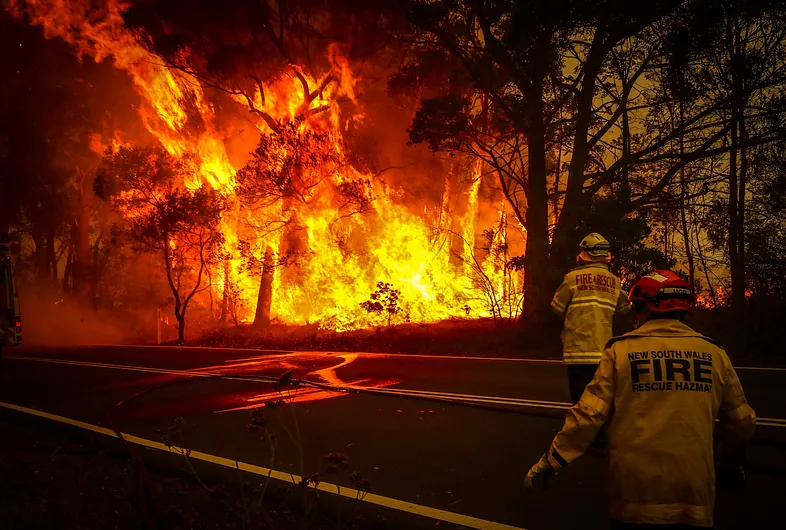
As the sun blazes across the vast Australian landscape, the nation finds itself at the mercy of extreme weather conditions. In a stark reminder of the ever-present challenges posed by Mother Nature, an intense heatwave is poised to envelop New South Wales (NSW), while the Northern Territory (NT) continues to battle elevated fire danger.
Heatwave Hits NSW:
New South Wales, a state already well-acquainted with hot summers, is preparing for an even more blistering experience as an intense heatwave sweeps through the region. With temperatures soaring to record-breaking levels, residents are being urged to take extra precautions to stay safe.
Northern Territory’s Persistent Fire Risk:
Meanwhile, in the Northern Territory, a different crisis looms — a prolonged period of elevated fire danger. The arid landscape of the NT is no stranger to bushfires, but the persistently high fire risk adds an extra layer of concern for local authorities and communities. Firefighters are on high alert, ready to respond at a moment’s notice.
The Climate Connection:
These simultaneous events underscore the interconnectedness of climate patterns in Australia. While the intense heatwave in NSW is primarily driven by its geographic location and seasonal factors, the Northern Territory’s persistent fire risk highlights the complex relationship between weather patterns and climate change. Rising temperatures and changing precipitation patterns contribute to the increased likelihood and severity of wildfires.
Community Preparedness:
In both regions, community preparedness and safety are paramount. Residents are advised to stay informed through official channels, adhere to fire bans, and take measures to protect themselves and their properties. It’s a sobering reminder of the importance of having a well-thought-out emergency plan in place, especially in areas prone to extreme weather events.
The Role of Climate Resilience:
As these climate-related challenges become more frequent and severe, governments and communities must prioritize climate resilience. Investing in infrastructure, emergency response capabilities, and sustainable practices can help mitigate the impacts of extreme weather events.
Today, Sydney is poised to reach a high of 30 degrees, while Darwin’s temperatures are expected to surge to 33 degrees. Both the Northern Territory (NT) and New South Wales (NSW) are anticipated to experience low 30s temperatures for an extended period in the coming days.
The intense heatwave set to envelop New South Wales (NSW) and the persistent fire danger in the Northern Territory (NT) can be attributed to a combination of meteorological and climatic factors:
High-Pressure Systems: A dominant high-pressure system in the atmosphere can lead to sinking air, which inhibits cloud formation and results in clear skies and high temperatures. Such systems can stagnate over regions for an extended period, intensifying the heatwave.
Seasonal Weather Patterns: Australia experiences seasonal variations, and during certain times of the year, hot and dry conditions become more prevalent. The timing of these weather patterns can contribute to heatwaves and increased fire danger.
Climate Change: Over the years, climate change has played a significant role in exacerbating extreme weather events. Rising global temperatures can lead to more frequent and severe heatwaves. Climate change can also disrupt traditional weather patterns, making it difficult to predict and manage these events.
Ocean Currents and Climate Drivers: Ocean currents, such as El Niño and La Niña, can have a significant impact on Australia’s climate. El Niño tends to bring drier and hotter conditions, while La Niña can lead to more rainfall and milder temperatures. These climate drivers can influence the severity of heatwaves and fire risk in different regions.
The intense heatwave in NSW and the elevated fire danger in the NT are the result of a complex interplay of meteorological and climatic factors, including high-pressure systems, seasonal weather patterns, climate change, local geography, natural variability, and ocean currents. Understanding these factors is crucial for preparedness, mitigation, and adaptation to extreme weather events in these regions.