Navaratri, a vibrant and culturally rich Hindu festival, is a celebration of the divine feminine and the triumph of good over evil. This festival, spanning nine nights and ten days, holds immense significance in Hinduism and is observed with great enthusiasm across India and other parts of the world. The history of Navaratri is deeply rooted in Hindu mythology and tradition.
Mythological Origins:
The history of Navaratri is intricately linked to Hindu mythology. One of the most well-known stories associated with Navaratri is the legend of the goddess Durga and her battle against the demon Mahishasura. According to this myth, the demon Mahishasura, who could change his form at will, wreaked havoc on the heavens, causing distress to both gods and humans. Unable to defeat Mahishasura, the gods invoked the divine feminine energy or Shakti, and Durga emerged as a manifestation of this power.
Durga, with her immense strength and power, engaged in a fierce battle with Mahishasura for nine nights and ten days. On the tenth day, she vanquished the demon, marking the victory of good over evil. This ten-day battle is symbolically represented during Navaratri, with the tenth day celebrated as Vijayadashami or Dussehra.
The Nine Forms of Durga:
During Navaratri, each of the nine nights is dedicated to one of the nine forms or manifestations of the goddess Durga. These forms are believed to represent various attributes and qualities of the divine feminine energy. The nine forms include Shailaputri, Brahmacharini, Chandraghanta, Kushmanda, Skandamata, Katyayani, Kalaratri, Mahagauri, and Siddhidhatri. Each form is adorned with unique symbolism and significance.
Regional and Cultural Variations:
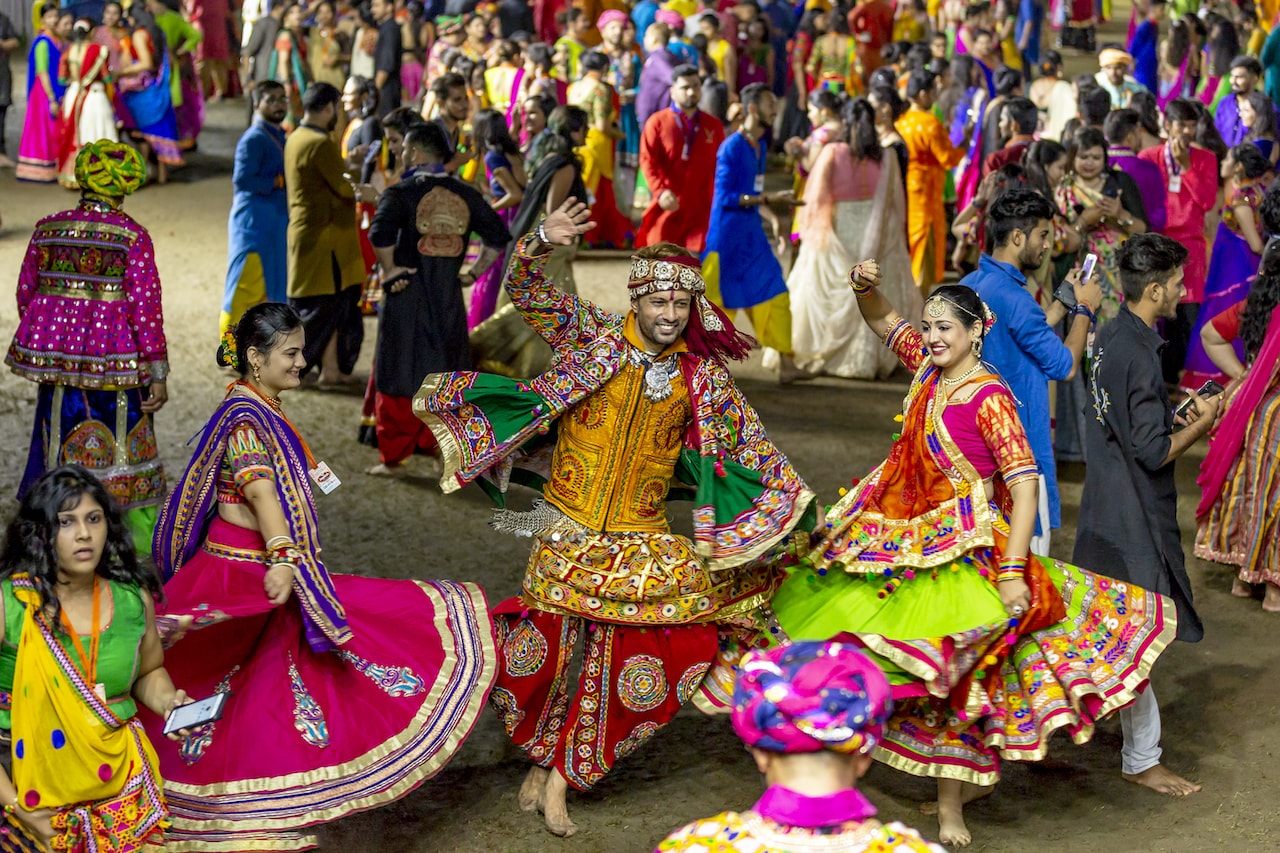
Navaratri is celebrated with diverse customs and traditions in different regions of India. In Gujarat, it is synonymous with the energetic and colorful Garba and Dandiya Raas dances. In West Bengal, Navaratri coincides with the grand festival of Durga Puja, where intricately crafted idols of the goddess Durga are worshipped and immersed in water on the tenth day.
Saraswati Puja:
In some parts of India, the ninth day of Navaratri is celebrated as Saraswati Puja, dedicated to the goddess of knowledge and wisdom, Saraswati. On this day, students and artists offer their prayers to seek blessings for success in their endeavors. It is customary to place books, musical instruments, and other tools of knowledge in front of the goddess’s idol for her blessings.
The Power of Devotion and Fasting:
Devotees of Navaratri often engage in fasting and prayer during these nine nights. Fasting is seen as a way to purify the body and mind, making it receptive to the divine energy. The fasting practices vary from complete abstinence from food to specific diets, such as consuming only fruits and milk. Many devotees also refrain from consuming alcohol and other impurities during this sacred period.
Culmination with Dussehra:
Navaratri culminates with the celebration of Vijayadashami or Dussehra on the tenth day. This day is marked by the symbolic burning of effigies of the demon Ravana, signifying the victory of Lord Rama over evil. In some regions, it is also believed to be the day when Lord Rama returned to Ayodhya after defeating Ravana, and his return is celebrated with grand processions and festivities.
Navatatri Celebration:

Navaratri Today:
In contemporary times, Navaratri has not only retained its religious and mythological significance but has also evolved into a cultural and social celebration. It is a time of joy, togetherness, and festivity when people come together to dance, sing, and celebrate the triumph of good over evil.
Navaratri serves as a reminder of the enduring power of the divine feminine and the strength that resides within each individual. It is a time to honor and celebrate the feminine energy, and a testament to the rich cultural heritage and spirituality that is integral to Hinduism and India’s diverse traditions.