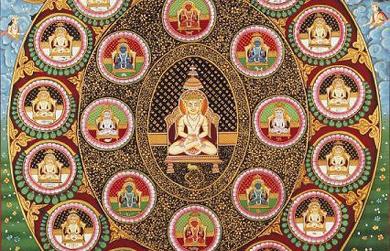
Jain Tirthankaras are revered spiritual figures in the Jain religion, which originated in ancient India. Tirthankara means “ford-maker,” symbolizing their role in guiding followers across the cycle of birth and death. Jains believe in the concept of eternal souls that have the potential to achieve liberation (moksha) through right knowledge, right faith, and right conduct.
There have been 24 Tirthankaras in Jainism, each representing a path to spiritual enlightenment and moral living. Some of the most well-known Tirthankaras include:
Lord Rishabhanatha (Adinatha): The first Tirthankara and considered the founder of Jainism. He is associated with teaching agriculture and the arts to humanity.
Lord Parshvanatha: The 23rd Tirthankara, known for promoting non-violence and self-discipline. He’s often depicted with a serpent canopy over his head.
Lord Mahavira: The 24th Tirthankara and the central figure of Jainism. He emphasized ascetic practices, non-violence, truthfulness, and compassion.
Each Tirthankara is associated with a specific set of teachings, and their lives serve as examples of the path to liberation. Jain temples and religious sites often have depictions or idols of these Tirthankaras, and their virtues and stories continue to inspire Jain practitioners to lead a life of righteousness and spiritual growth.