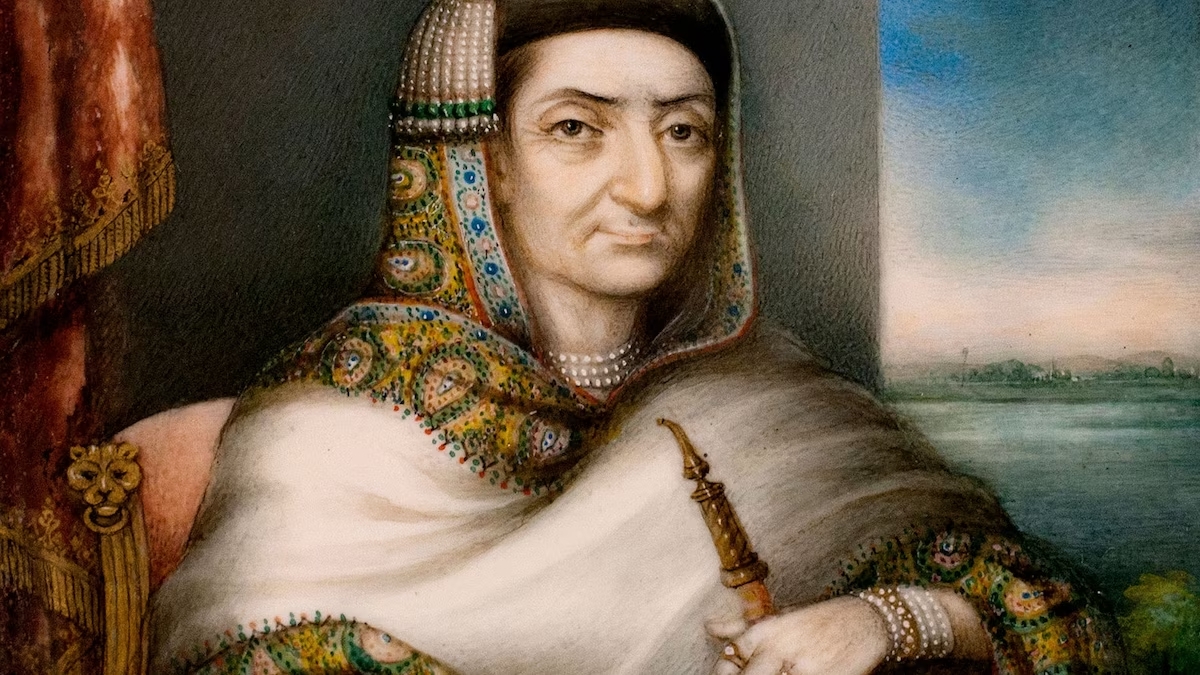
In the pages of history, there are tales that stand out as remarkable, defying norms and expectations. One such captivating story is that of Begum Samru, a young dancer who transformed herself into a formidable woman ruler in India. Her journey is a testament to the indomitable spirit of ambition and resilience.
Begum Samru’s story begins in the early 18th century in Sardhana, a small town in Uttar Pradesh, India. Born as Farzana Zebunissa, she entered this world as a girl with a passion for dance. At the tender age of 14, her life took an unexpected turn that would shape the course of her destiny.
Embracing her love for dance, Farzana caught the attention of a European mercenary named Walter Reinhardt Sombre. Fate wove its intricate threads as she not only became his wife but also his trusted companion. Following his death, she inherited his wealth, power, and influence, transforming herself into Begum Samru.
Begum Samru’s rise to prominence was no easy feat, especially in a society where women were often relegated to the domestic sphere. However, her ambition burned brightly, and she navigated the intricate web of politics and power with skill and intelligence. In a remarkable turn of events, she emerged as a prominent figure in the political landscape of northern India.
What makes Begum Samru’s tale truly compelling is not just her ascent to power but the challenges she overcame along the way. Her journey was marked by battles, both on the battlefield and within the confines of societal expectations. In a male-dominated world, she not only held her ground but also carved a niche for herself as a shrewd and effective ruler.
Begum Samru’s reign as a woman ruler was characterized by a unique blend of Eastern and Western influences. She not only embraced the cultural richness of India but also drew upon the military strategies she learned from her European husband. This fusion of diverse elements added a distinctive flavor to her rule, making her a leader who transcended traditional boundaries.
As a patron of the arts and culture, Begum Samru played a pivotal role in fostering creativity and innovation in her realm. Her court became a hub of intellectual exchange, where poets, artists, and thinkers flourished under her patronage. This legacy endures as a testament to her commitment to the enrichment of both her people and the cultural landscape of her domain.
Begum Samru’s story challenges stereotypes and inspires individuals to pursue their ambitions relentlessly. From a young dancer with dreams to a powerful ruler who left an indelible mark on history, her journey is a beacon of hope for those who dare to defy conventions and reach for the stars.
One of the defining moments in Begum Samru’s rule was her role in the Third Battle of Panipat in 1761. Recognizing the strategic importance of alliances, she forged key relationships with various factions, solidifying her position as a significant political player. Her forces played a crucial role in the battle, and her leadership on the battlefield earned her both respect and fear.
Despite the challenges of governance and warfare, Begum Samru’s commitment to the welfare of her people remained unwavering. She implemented policies aimed at fostering economic prosperity, religious tolerance, and social harmony. Her administration was characterized by a sense of inclusivity, where people from diverse backgrounds found a place within her realm.
Begum Samru’s personal life was as intriguing as her political career. Her marriage to the French officer Walter Reinhardt Sombre was a union that transcended cultural and social boundaries. After his death, she faced numerous trials, including disputes over her inheritance and challenges to her authority. Yet, she emerged victorious, proving that her mettle extended beyond the battlefield to the corridors of power.
The legacy of Begum Samru endures not only in the pages of history but also in the architectural marvels she left behind. The Sardhana Church, also known as the Basilica of Our Lady of Graces, stands as a testament to her patronage of the arts and her enduring impact on the cultural landscape. The church, with its unique blend of European and Indian architectural styles, reflects the fusion of influences that defined her rule.
Begum Samru’s tale is a reminder that history is shaped not only by grand political movements but also by the individual stories of those who dare to dream and strive for greatness. Her ability to transcend societal expectations and redefine her destiny is a narrative that resonates across time and cultures.
Begum Samru’s journey from a 14-year-old dancer to India’s reigning woman ruler is a compelling saga of ambition, resilience, and triumph. Her story challenges preconceived notions about gender roles and power dynamics, offering a timeless lesson in the pursuit of one’s aspirations. Begum Samru’s legacy continues to inspire, inviting us to explore the depths of our own ambitions and overcome the obstacles that stand in the way of realizing our true potential.